7 tactics to help you succeed in the alcoholic beverage industry
Table of contents
- What is the alcoholic beverage industry?
- How big are the main alcoholic beverage industry product categories?
- What is trending in the beverage industry
- What are the most popular alcoholic beverage industry packaging options?
- Alcoholic beverage industry market research: Why do they matter?
- What are the alcoholic beverage industry taxes and regulations you should know about?
- Let Hillebrand Gori pave your path to success
The alcoholic beverage industry presents an opportunity for people passionate about wine, beer and spirits. With a revenue of $304.4 billion in the US alone in 2024, the industry is growing in value globally.
However, strict regulations, high alcohol-related taxes, and rising operational costs pose significant challenges that organisations need to overcome.
Here are seven answers to key questions that’ll help you in this highly competitive market. Even in difficult times.
What is the alcoholic beverage industry?
The alcoholic beverage industry is a prosperous market projected to reach nearly $2 trillion globally by 2025. It includes all businesses contributing to bringing alcoholic beverages to consumers such as:
- Raw ingredients suppliers. Those growing the ingredients to craft the beverages such as grapes, grains, fruits, sugar or any other needed.
- Packaging and other materials suppliers. Those producing the materials to craft the wines and beers such as bottle producers, corks, cases, and yeasts.
- Producers. Companies brewing, distilling, and bottling alcoholic beverages.
- Contractors. Enterprises supplying products and services to the industry. From machinery to logistics and marketing.
- Importers and Distributors. Firms purchasing wine, beer, and spirits from the manufacturers and selling them to retailers or end consumers.
- Retailers. Selling alcoholic beverages to consumers on-premises (e.g., pubs and restaurants) and off-premises (e.g., stores and supermarkets).
How big are the main alcoholic beverage industry product categories?
The alcoholic beverage market is expected to reach $545.8 billion in 2024. Social media, marketing and branding strategies, innovation, and globalization are all contributing to a growth that is expected to continue in the next few years. Here, we’ve listed some insights about the three main alcoholic beverage segments.
- Wine. Despite the growth projections of the alcoholic beverage market, the volume of wine sold in 2023 decreased by 4%. This negative trend is expected to continue in 2024. On the bright side, U.S. premium wine sales have remained positive.
- Beer. In April 2024, U.S. consumers bought more import beer than domestic premium beer for the first time ever. Mexican beer shipment to the U.S. had already reached 773.8 million gallons in October 2023 and it is keeping on growing. At global level, the beer market is anticipated to grow to $148.43 billion between 2023 and 2028.
- Spirits/liquors. According to a recent survey, 41% of U.S. consumers aged 21-44 are planning to buy more premium spirits in 2024. At global level, vodka and whiskey are projected to generate up to 41% of the spirit industry revenue.
What is trending in the beverage industry
Most people like a cold beer, a sparkling Prosecco, or a rich, smoky Bourbon. However, consumers are always looking for new tastes, innovative packages, and unique drinks. The growing demand for pre-mixed drinks or ready-to-drink alcoholic beverages (RTDs) is a typical example. These convenient, on-the-go beverages have become a very popular alternative to traditional spirits.
They require no additional preparation, are easy to pack and carry, and they do not compromise on quality. They have become premium drinks that often include natural flavors and high-quality premium spirits. And their popularity is rising - RTD sales increased by 6% in 2023.
What are the most popular alcoholic beverage industry packaging options?
With all the packaging options out there, choosing the correct one isn’t always easy. Each material has different effects on drinks, customers' perceptions and costs.
Bottles
Bottles are a classic. Easy to pack in cases, are the consumers’ preferred choice. The disadvantages? An incorrectly sealed bottle or bottles that aren’t protected from unfavourable temperatures and humidity during transportation, could end up spoiling the wine or beer.
Cans
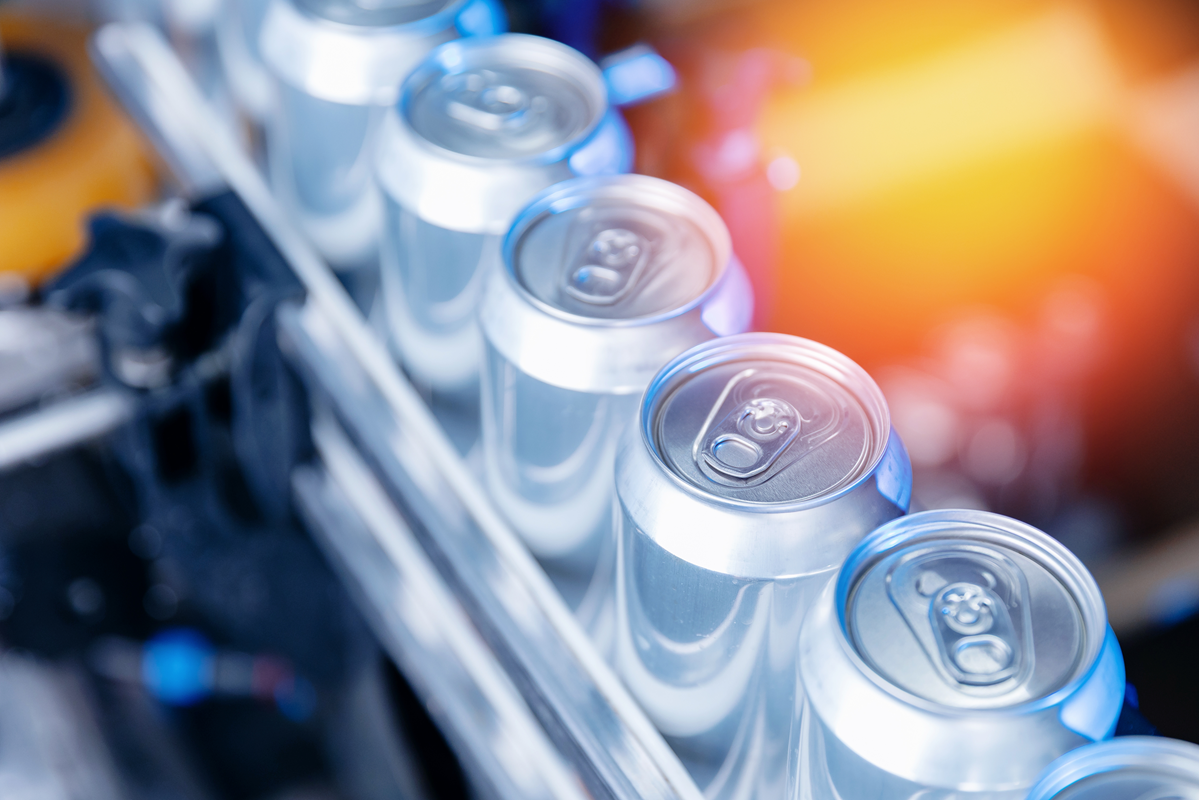
Used mainly for beer and RTDs and occasionally wine. It’s a lightweight, recyclable alternative to glass bottles that’ll protect your drinks from light, oxygen, and UV rays. Moreover, most cans are protected by special coatings that prevent metal taste.
Kegs
A practical container, used for beer, cider and sometimes wine. Stainless steel kegs let you transport and store your products maximizing space and efficiency. The downside is that they can be more expensive due to their weight and the cleaning and collection costs. However, you’ll save money in the long run as kegs can be reused for years.
Bag-in-a-Box
Bag-in-box (BIB) wine might not be for everyone; however, it has its advantages. Ideal for, it’s sustainable, economical, and easy to stack. According to recent research, 64% of UK drink’s sellers plan to list BIBs in their stores in the next two years.
Alcoholic beverage industry market research: Why do they matter?
Alcoholic beverage industry market reports provide valuable insights that’ll enable you to:
- Capitalise on opportunities, and
- Make the right decisions at the right time.
For instance, according to SipSource, consumers are starting to shift their drink preferences from wine and beer to spirits. Another recent research shows that younger generations are 22% more likely to be interested in mixology (i.e., cocktail making).
Knowledge is power. So, to get you started, we’ve put together a few recent statistics about the alcoholic beverage industry market.
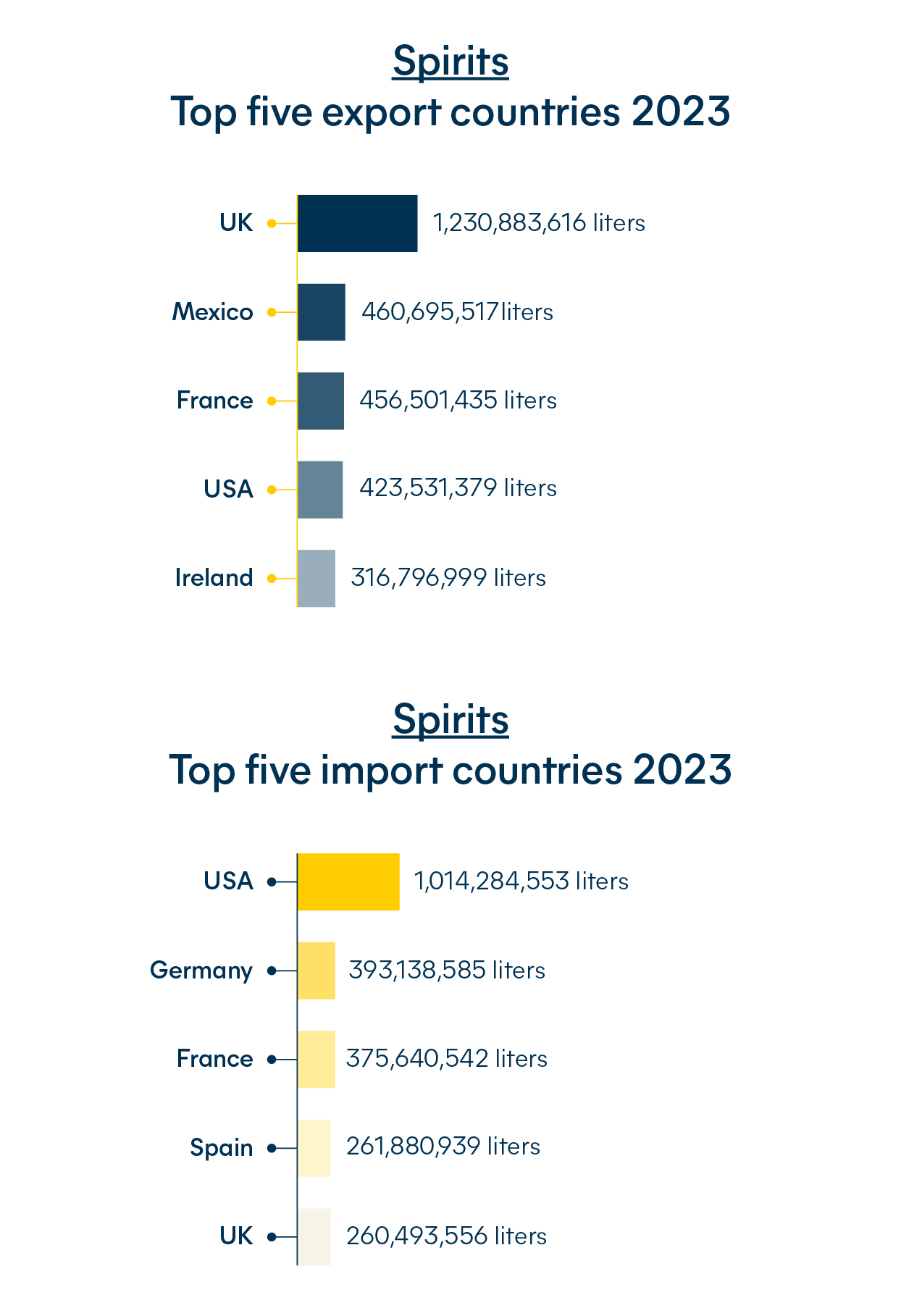
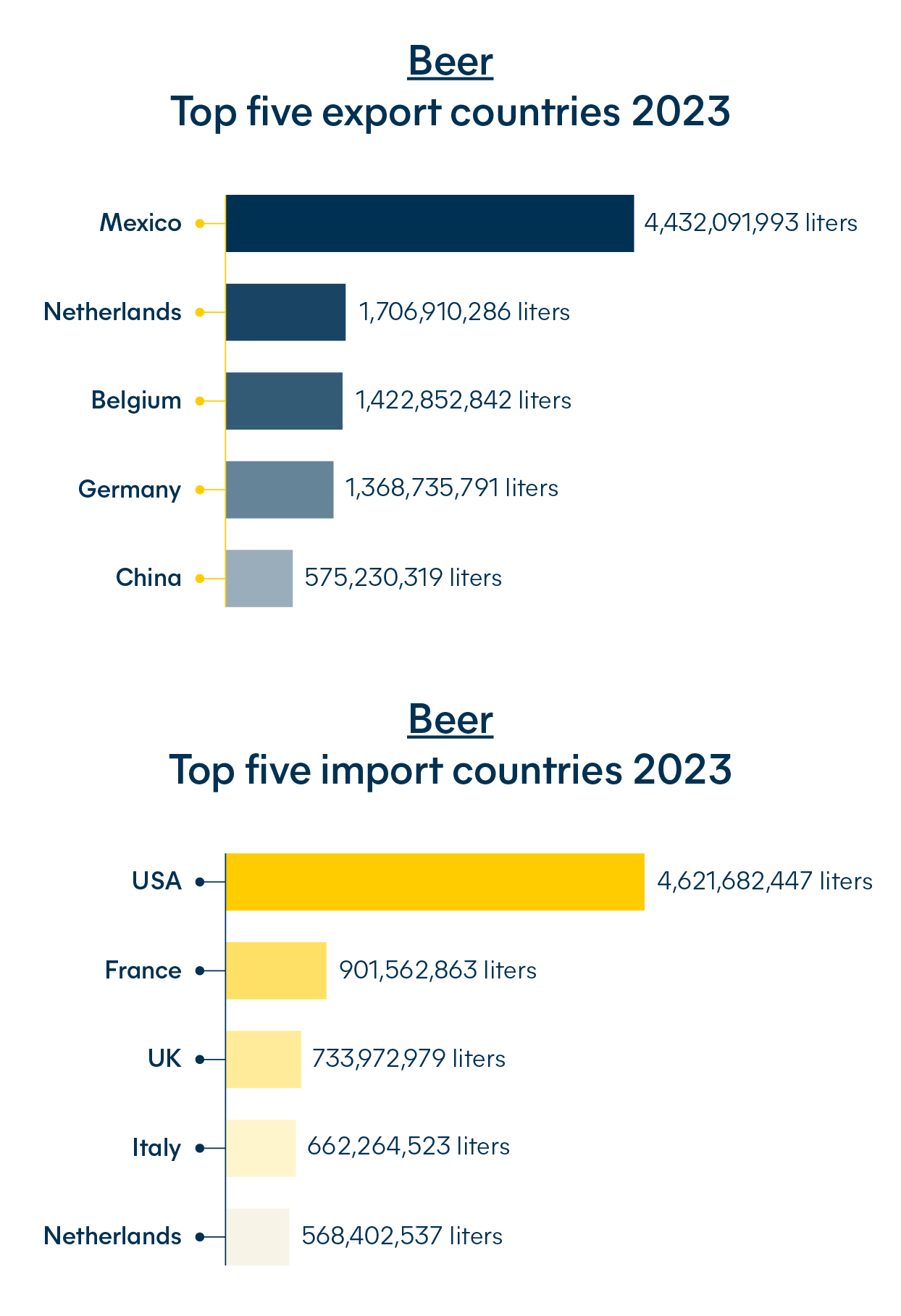
The graphic shows the top five export and import countries for wine, beer, and spirits

Source: S&P IHS Markit
What are the alcoholic beverage industry taxes and regulations you should know about?
Alcohol is a taxable product subject to a large number of regulations. That's why it's important to rely on an expert such as Hillebrand Gori if you need to import or export wine. Here, we’ve summarised some of the key alcoholic beverage industry products’ laws and rules.
- The new EU labelling rule. Are you in the wine market? Remember that since December 8 2023, labels of wine sold in the European Union must include information on nutritional content, energy value, and ingredients.
- The US three-tier system. Are you planning to export your wine to the USA? On top of fulfilling the requirements of the main national bodies regulating the wine import, you’ll also have to go through a pretty complex three-tier system process.
- The UK Drink Responsibly campaign. Promoted by the UK government in partnership with the alcoholic beverage industry and local organisations. Among the initiatives, is a set of guidelines for specific label information on wines sold in the UK.
- Ireland’s new warning law. Coming into force in May 2026, Ireland is the first country to have passed a law requiring wine bottles to include warnings similar to those on cigarette packets.
- The US Strengthening Organic Enforcement (SOE) rule. Announced in January, 2023, requires every business buying, selling or trading organic wine to be certified as organic. Distributors, exporters, importers. It applies to everyone.
- The US DOC and Appellation of Origin. Are you importing wines labelled with a foreign appellation of origin (e.g., DOC) into the US? You’ll have to comply with the Alcohols and Tobacco Tax and Trade Bureau (TTB) appellation of origin regulation.
At the end of the day, each country has its own rules and taxes which you’ll need to be aware of and comply with. Ensuring your business complies with local, state, and federal alcoholic beverage industry regulations will protect your business.
Let Hillebrand Gori pave your path to success
Achieving success in the alcoholic beverage industry demands a:
- Well-planned, sustainable, cost-effective approach,
- Expertise and knowhow,
- Regulatory expertise, and
- Winning logistic strategies.
Take your business to the next level. Get in touch today. At Hillebrand Gori, we offer services and solutions to enable you to optimise costs and service, and lower your carbon footprint.

Reviewed by Hillebrand Gori
The beverage industry includes all businesses and activities involved in the production, distribution, and sale of drinks. Drinks can be non-alcoholic such as water or soft drinks, or alcoholic such as wine, beer, and spirits.
The beverage industry's global market is predicted to grow from $235.70 billion in 2024 to a whopping $380.40 billion by 2029. This translates into an annual growth rate (CAGR 2024-2029) of 10.05%.
Based on TheDrinkBusiness’ recent analysis these are the five most sold alcoholic beverages:
- Beer, thanks to an increased popularity of craft beers and expansion in emerging countries markets. Global market size: $793.74 billion.
- Wine, due to a growing interest for premium and luxury wines. Global market size: $441.6 billion.
- Liqueurs, rising in popularity as a response to the demand for distinctive and high-quality alcoholic beverages. Global market size: $128.9 billion.
- Baijiu, one of the most appreciated alcoholic beverages in China. Global market size: $95.21 billion.
- Whiskey, often used by millennials as a premium ingredient in cocktails. Global market size: $64 billion.
How can we help your business grow?
-(1).png?sfvrsn=10235581_1)