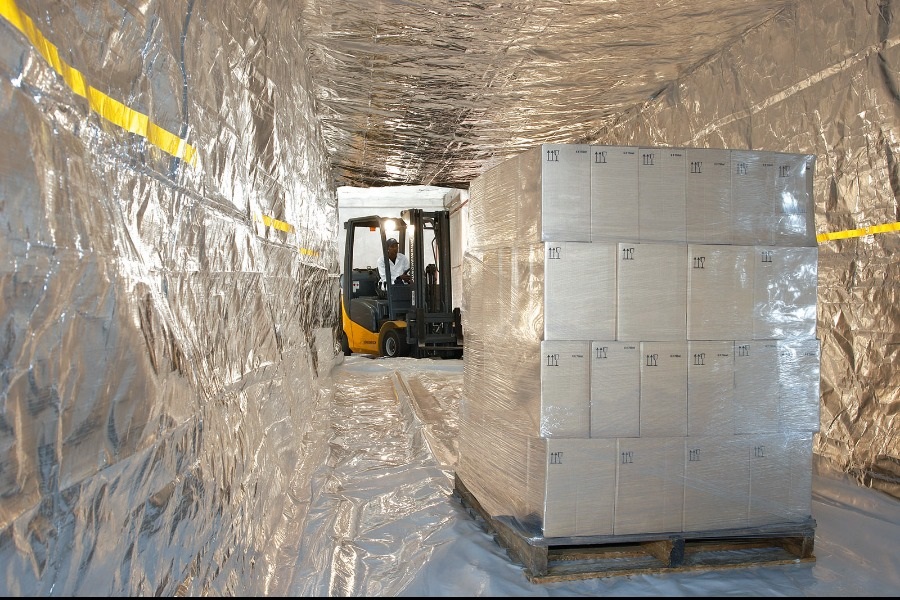
Temperature-controlled transport for wine, beer and spirits
You invest years ageing wine, brewing beer and maturing spirits. We focus on protecting them from temperature risk during global transport.
Wine, beer and spirits are sensitive to heat, cold and humidity during sea shipping and inland movement. Without the right container protection, thermal shock and condensation can influence flavour stability, closure integrity and packaging presentation.
Most wines and beers perform best between +10°C and +20°C. Temperatures above +30°C significantly increase the probability of accelerated ageing, flavour change and packaging stress during long sea journeys.
You can help stabilise the environment inside the container, with our temperature-controlled transport solutions that help protect beverage quality from loading through to arrival.
Certain trade lanes experience Very High or Extreme seasonal exposure, particularly when crossing equatorial regions or moving between hemispheres. Delays at terminals or extended dwell time can further increase risk.
Align your container choice with expected climatic conditions, reduce uncertainty and support consistent beverage quality. We analyse historical meteorological data and trade-lane patterns to assess exposure before shipment begins.
We design and manufacture insulation liners specifically for the transport of wine, beer and spirits.
Fitted inside a dry container, insulation liners reduce internal temperature fluctuation and help manage humidity during sea shipping. By reflecting radiant heat and limiting temperature ingress, they reduce thermal shock caused by day–night cycles and seasonal variation.
Certain models include breathable membrane ceilings that stabilise humidity and reduce condensation risk. This supports both beverage integrity and packaging presentation throughout the journey.
Insulation liners are widely used for long sea routes and seasonal heat exposure where active refrigeration is not required.
Reefer containers actively maintain a defined temperature throughout transport. Unlike passive insulation, reefers provide continuous temperature control from departure to arrival.
They are typically selected when:
- Precise temperature parameters are contractually required
- Transit duration increases sustained heat exposure
- Organic or low-sulphite wines require tighter control
- Trade lanes present prolonged Extreme conditions
Reefers provide maximum stability when product sensitivity demands a controlled environment.
Your container choice depends on route exposure, seasonality, transit duration and beverage sensitivity. A dry container may be suitable for short routes with stable climates. An insulation liner provides moderated protection against temperature and humidity fluctuation. A reefer container delivers active, controlled temperature management. The right solution balances quality protection, cost predictability and sustainability priorities.
You can have visibility of temperature, humidity, light and inland location with our data loggers. Record and review actual conditions inside the container throughout the journey to make more informed desicions on container type performance.
Make better desicions for your shipments with our help.
Wine, beer and spirits respond differently to environmental change. Closure types, packaging formats and product sensitivity all influence the level of protection required.
We combine alcoholic beverage transport knowledge, container-based protection solutions and route risk insight to support stable, reliable movements worldwide.
.tmb-banner.webp?Culture=en&sfvrsn=ec86a304_1)