Transportation sustainability key terms to know
Sustainability discussions in beverage transport are becoming more technical. From CO2e reporting and Scope 3 emissions to book & claim and ETS regulations, understanding the terminology can help wine, beer and spirits importers, producers and distributors make more informed supply chain decisions.
This glossary explains common transport sustainability terms used across global logistics and decarbonisation discussions. Each definition is written to help you understand what the term means in practice and how it may relate to your beverage supply chain.
What are transport sustainability terms?
Transport sustainability terms are the words and concepts commonly used to describe greenhouse gas emissions, fuel alternatives, reporting standards and decarbonisation measures within logistics and supply chains.
For wine, beer and spirits businesses, understanding these terms can support reporting, procurement decisions, compliance planning and conversations with logistics partners.
A glossary of transport sustainability terms
Alternative fuels
Alternative fuels are fuels used instead of conventional fossil fuels such as diesel, marine fuel oil or kerosene. In beverage transport, these can include Sustainable Marine Fuel (SMF) and Sustainable Aviation Fuel (SAF).
These fuels can support lower lifecycle greenhouse gas emissions compared to conventional fuels, depending on feedstock, production method, and verified lifecycle assessment methodology.
Biofuels
Biofuels are fuels produced from renewable biological materials or waste-based feedstocks, such as used cooking oil.
In logistics, advanced or second-generation biofuels are commonly referenced because they are produced from waste materials rather than crops grown specifically for fuel production. According to Hillebrand Gori’s GoGreen Plus framework, these fuels can result in lower lifecycle greenhouse gas emissions compared to conventional fossil fuels when assessed using recognised well-to-wake methodologies.
Related reading: The role of fuel in lowering transport emissions
Book & claim
Book & claim is an accounting approach used to allocate the environmental attributes of sustainable fuels across a transport network.
This means the sustainable fuel is not necessarily physically used by the specific vessel or aircraft transporting your shipment. Instead, the environmental benefit is allocated through a verified accounting process within the same transport mode.
Book & claim is commonly used because sustainable fuels are currently only available at selected ports and airports globally. The approach helps scale the adoption of lower-carbon fuels without requiring every shipment to physically use the fuel.
GoGreen Plus is a value-added service that supports the allocation of emission reduction benefits associated with the use of alternative fuels within the logistics network. This does not necessarily mean the specific shipment is transported using those fuels.
Related reading: What is GoGreen Plus?
Carbon dioxide (CO2)
Carbon dioxide (CO2) is a greenhouse gas released primarily through the combustion of fossil fuels used in transport, manufacturing and energy production.
In logistics, CO2 is one of the main greenhouse gases measured when calculating transport emissions.
Carbon dioxide equivalent (CO2e)
CO2e stands for carbon dioxide equivalent. It is a standard measurement used to compare the impact of different greenhouse gases based on their contribution to global warming.
Using CO2e allows multiple greenhouse gases, including methane and nitrous oxide, to be reported as one combined emissions figure.
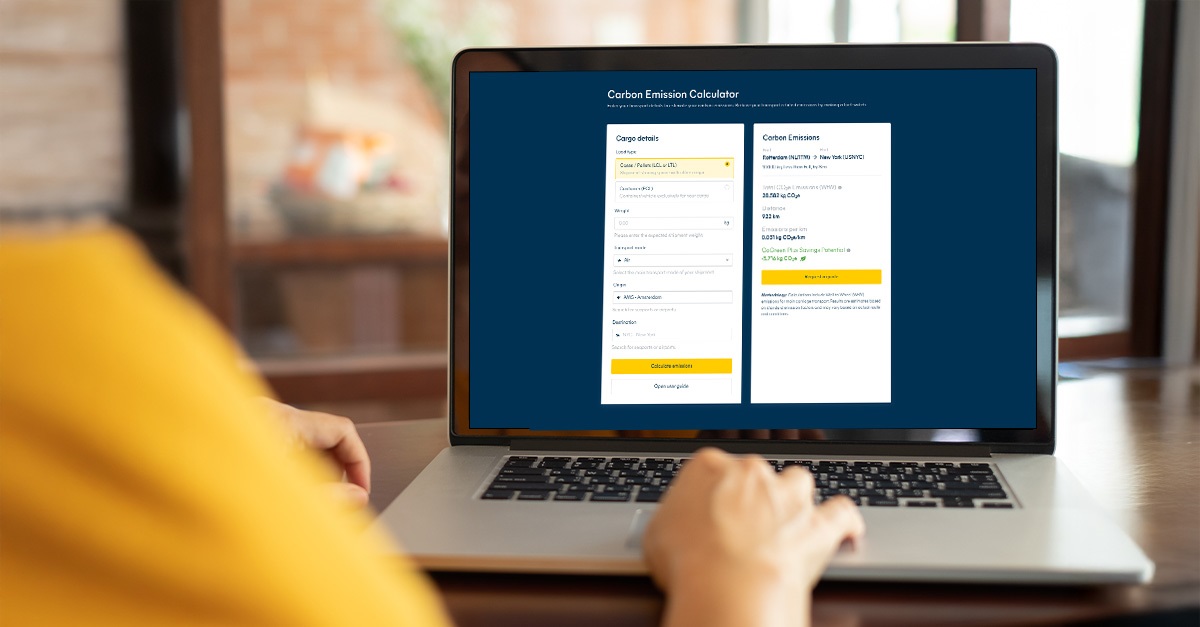
Related reading: What is a carbon calculator and why does it matter in beverage transport?
Decarbonisation
Decarbonisation refers to actions taken to reduce greenhouse gas emissions associated with business activities, including transport and logistics.
In beverage logistics, this can include:
- using sustainable fuels
- consolidating shipments
- optimising routes
- increasing transport visibility
- reducing empty movements
- selecting transport modes associated with lower emissions intensity where operationally feasible.
Related reading: Go green: The route to sustainability in logistics for importers
Emissions reporting
Emissions reporting is the process of measuring and documenting greenhouse gas emissions associated with operations or supply chains.
Many beverage importers and producers now require emissions visibility to support internal ESG reporting, customer requests and regulatory requirements.
Related reading: How data-driven insight supports better supply chain performance
ESRS (European Sustainability Reporting Standards)
ESRS are reporting standards introduced under the EU Corporate Sustainability Reporting Directive (CSRD).
These standards define how companies report sustainability-related information, including greenhouse gas emissions and climate-related impacts.
The ESRS framework recognises certain market-based measures within emissions accounting approaches.
ETS (Emissions Trading System)
The Emissions Trading System (ETS) is a regulatory framework that puts a price on greenhouse gas emissions.
Within maritime logistics, the EU ETS now applies to shipping activities involving European ports. Shipping companies are required to purchase emissions allowances based on reported emissions levels.
These regulations can influence transport costs, route planning and reporting requirements across beverage supply chains.
Related reading: EU ETS and FuelEU Maritime: What alcoholic beverage importers need to know
FuelEU Maritime
FuelEU Maritime is an EU regulation designed to reduce the greenhouse gas intensity of fuels used in maritime transport. The regulation encourages the adoption of lower-emission marine fuels and forms part of the EU’s wider Fit for 55 package.
Related reading: What does the Fit for 55 package mean for wine shipping?
GHG emissions
GHG emissions are greenhouse gas emissions released into the atmosphere through activities such as fuel combustion and industrial production.
In logistics, greenhouse gases are mainly generated through trucks, vessels, aircraft and warehousing operations.
GoGreen Plus
GoGreen Plus* is a value-added service from Hillebrand Gori that supports emission reduction through the use of alternative fuels and low-emission transportation solutions within the logistics network.
The service uses a book & claim approach and can leverage Sustainable Marine Fuel (SMF) or Sustainable Aviation Fuel (SAF). This does not necessarily mean the specific shipment is physically transported using those fuels.
* GoGreen Plus is a value-added service to a DHL shipment contributing to decarbonization measures within DHL’s logistics network. By using alternative fuels and/or technologies DHL reduces the usage of fossil fuels in the mode of transport used for the GoGreen Plus shipment. This does not necessarily mean that the specific shipment is physically transported with the assets using these fuels or technologies. Further information, e.g. on concrete decarbonization measures is available at https://www.hillebrandgori.com/services/beverage-transport/gogreen-solutions
ISO 14083
ISO 14083 is an international standard for calculating and reporting greenhouse gas emissions from transport and logistics operations.
It helps create more consistent emissions reporting across global supply chains.
Lifecycle emissions
Lifecycle emissions refer to greenhouse gas emissions generated across the entire lifecycle of a fuel or transport activity.
For fuels, this includes:
- production
- processing
- distribution
- combustion
Lifecycle emissions are often measured on a well-to-wake basis in shipping and aviation.
SAF (Sustainable Aviation Fuel)
SAF stands for Sustainable Aviation Fuel. It is an alternative aviation fuel produced from renewable or waste-based feedstocks.
Compared to conventional jet fuel, SAF can support lower lifecycle greenhouse gas emissions depending on the fuel pathway and feedstock used.
Scope 1 emissions
Scope 1 emissions are direct greenhouse gas emissions generated from assets or operations directly controlled by a company.
Scope 2 emissions
Scope 2 emissions are indirect greenhouse gas emissions associated with purchased electricity, heating or cooling used by a company.
Scope 3 emissions
Scope 3 emissions are indirect greenhouse gas emissions generated across a company’s wider value chain, including subcontracted transport providers and suppliers.
For many wine, beer and spirits businesses, transport-related emissions are often part of Scope 3 reporting requirements.
SMF (Sustainable Marine Fuel)
SMF stands for Sustainable Marine Fuel. It is an alternative marine fuel designed to enable lower lifecycle greenhouse gas emissions compared to conventional marine fuels, depending on production pathway and assessment methodology.
SMF is commonly referenced within ocean freight decarbonisation discussions and can be allocated using a book & claim approach.
Sustainable fuels
Sustainable fuels are fuels designed to deliver lower lifecycle greenhouse gas emissions compared to conventional fossil fuels, subject to feedstock, pathway and calculation methodology.
Examples include:
- Sustainable Marine Fuel (SMF)
- Sustainable Aviation Fuel (SAF)
- advanced biofuels produced from waste-based feedstocks
Hillebrand Gori’s GoGreen Plus framework explains that these fuels can achieve significant lifecycle greenhouse gas emission reductions, in some cases up to around 80% on a well-to-wake basis, depending on fuel type, feedstock and calculation methodology.
Well-to-wake (WtW) emissions
Well-to-wake emissions measure greenhouse gas emissions generated across the full lifecycle of transport fuel usage.
This includes:
- fuel production
- processing
- transport
- combustion during operation
Well-to-wake calculations provide a broader emissions picture than measuring tailpipe emissions alone.
Why understanding transport sustainability terms matters
Sustainability reporting, emissions visibility and fuel-related regulations are becoming part of everyday supply chain discussions across the wine, beer and spirits industry.
Understanding the terminology behind these conversations can help you:
- interpret emissions reports more confidently
- prepare for regulatory changes
- support ESG reporting requirements
- evaluate lower-emission transport options
- improve communication across procurement, logistics and sustainability teams
As reporting frameworks and regulations continue to evolve, having clear and accurate information is becoming increasingly important for global beverage supply chains.
At Hillebrand Gori, we support wine, beer and spirits businesses with beverage transport solutions that combine operational visibility, route planning, emissions reporting, product protection and logistics options associated with lower greenhouse gas emissions compared to conventional alternatives.
How Hillebrand Gori can support you with low-emission transport solutions
Understanding transport sustainability terms is one part of building a clearer emissions strategy. Acting on that information is the next step.
At Hillebrand Gori, we support wine, beer and spirits importers, producers and distributors with beverage transport solutions that combine operational visibility, route planning, emissions reporting and lower-carbon logistics options.
Through our global network, local expertise and digital tools, we can help you understand where transport emissions occur, compare options across trade lanes and consider services such as GoGreen Plus, which supports emission reduction through the use of sustainable fuels within the logistics network using a book & claim approach.
Whether you are preparing internal reporting, responding to customer questions or reviewing transport options across markets, we can help make sustainability-related decisions easier to understand and easier to act on.
* GoGreen Plus is a value-added service to a DHL shipment contributing to decarbonization measures within DHL’s logistics network. By using alternative fuels and/or technologies DHL reduces the usage of fossil fuels in the mode of transport used for the GoGreen Plus shipment. This does not necessarily mean that the specific shipment is physically transported with the assets using these fuels or technologies. Further information, e.g. on concrete decarbonization measures is available here.
Explore our sustainability efforts to see how they can support your goals across wine, beer and spirits transport.
CO2e stands for carbon dioxide equivalent. It is used to combine the impact of different greenhouse gases into one comparable measurement. This helps businesses measure and report transport-related emissions more consistently across supply chains.
Book & claim is a market-based accounting approach that separates the physical use of sustainable fuel from the environmental benefit allocation. This means a shipment may not physically travel using sustainable fuel, but the emissions reduction benefit can still be allocated within the same transport network through a verified process.
Scope 3 emissions include indirect emissions generated across a company’s value chain, including subcontracted transport providers. For many beverage importers, producers and distributors, transport emissions represent a significant part of their overall emissions reporting requirements.
.tmb-banner.webp?Culture=en&sfvrsn=b218358c_1)