Sustainable fuels and their role in lowering transport emissions for wine, beer and spirits
Table of contents
- Introduction
- What are sustainable fuels?
- Why does fuel choice matter for transport emissions?
- How do Sustainable Marine Fuel and Sustainable Aviation Fuel reduce emissions?
- What is book and claim?
- How does GoGreen Plus* work?
- Why are sustainable fuels becoming more important?
- How Hillebrand Gori can help with understanding sustainable fuel use in transportation
Reducing transport-related greenhouse gas emissions has become a priority for many wine, beer and spirits businesses. Importers, producers and distributors are increasingly looking for ways to align supply chains with corporate sustainability goals while maintaining reliable global transport networks.
For many years, improving transport efficiency was the primary route to lowering emissions. Better route planning, shipment consolidation and modal shifts continue to play an important role. Today, however, sustainable fuels are emerging as an additional decarbonization measure.
For alcoholic beverage supply chains that rely on global ocean freight and air freight networks, Sustainable Marine Fuel (SMF) and Sustainable Aviation Fuel (SAF) can help reduce lifecycle greenhouse gas emissions compared to conventional fossil fuels. Through solutions such as GoGreen Plus*, businesses can support the use of lower-emission fuels within transport networks while maintaining the flexibility of existing global logistics networks.
What are sustainable fuels?
Sustainable fuels are alternatives to conventional fossil fuels used in transportation. They are produced from renewable or recycled feedstocks and can be used within existing transport infrastructure.
Examples include:
- Sustainable Marine Fuel (SMF) used in ocean freight
- Sustainable Aviation Fuel (SAF) used in air freight
- Biofuels produced from renewable feedstocks such as used cooking oil
- Synthetic fuels produced using renewable energy sources
The potential environmental benefit of sustainable fuels comes from their lower lifecycle greenhouse gas emissions compared to conventional fuels. The exact reduction depends on the fuel type, feedstock and production process.
For businesses moving wine, beer and spirits internationally, sustainable fuels offer a way to support decarbonization efforts without changing transport modes, routes or supply chain structures.
Why does fuel choice matter for transport emissions?
Transport emissions are directly linked to fuel consumption. Historically, global transport networks have relied on fossil fuels, which release greenhouse gases into the atmosphere.
There are two main approaches to lowering transport emissions:
Burn less
Optimise transport operations to use less fuel through consolidation, routing improvements and modal optimisation.
Burn clean
Replace conventional fuels with lower-emission alternatives such as Sustainable Marine Fuel and Sustainable Aviation Fuel.
While efficiency improvements remain important, the logistics industry increasingly recognises that sustainable fuels will play a critical role in long-term transport decarbonization.
According to DHL’s approved GoGreen Plus* methodology, Sustainable Marine Fuel and Sustainable Aviation Fuel can reduce up to approximately 80% of Well-to-Wake greenhouse gas emissions compared to conventional fossil fuel alternatives, depending on the fuel type, feedstock and production pathway.
How do Sustainable Marine Fuel and Sustainable Aviation Fuel reduce emissions?
Traditional marine and aviation fuels are produced from fossil resources. Sustainable fuels use alternative feedstocks and production methods that result in lower lifecycle greenhouse gas emissions.
Emission reduction claims for Sustainable Marine Fuel and Sustainable Aviation Fuel are measured against a conventional fossil fuel baseline. The reduction reflects lifecycle, or Well-to-Wake, greenhouse gas emissions rather than only emissions generated during transport operations.
Emissions calculations increasingly follow recognised methodologies such as the Smart Freight Centre’s Market-Based Measures Framework, supporting consistent comparison of transport emissions across different modes of transport.
This means the calculation considers:
- Fuel production
- Fuel transport and distribution
- Fuel consumption during transport
For businesses shipping wine, beer and spirits globally, sustainable fuels can therefore support quantified reductions in transport-related emissions based on recognised emissions accounting methodologies.
The growing use of sustainable fuels is also linked to evolving regulations designed to reduce transport emissions, including FuelEU Maritime. These initiatives are increasing demand for lower-emission marine fuels across global shipping networks.
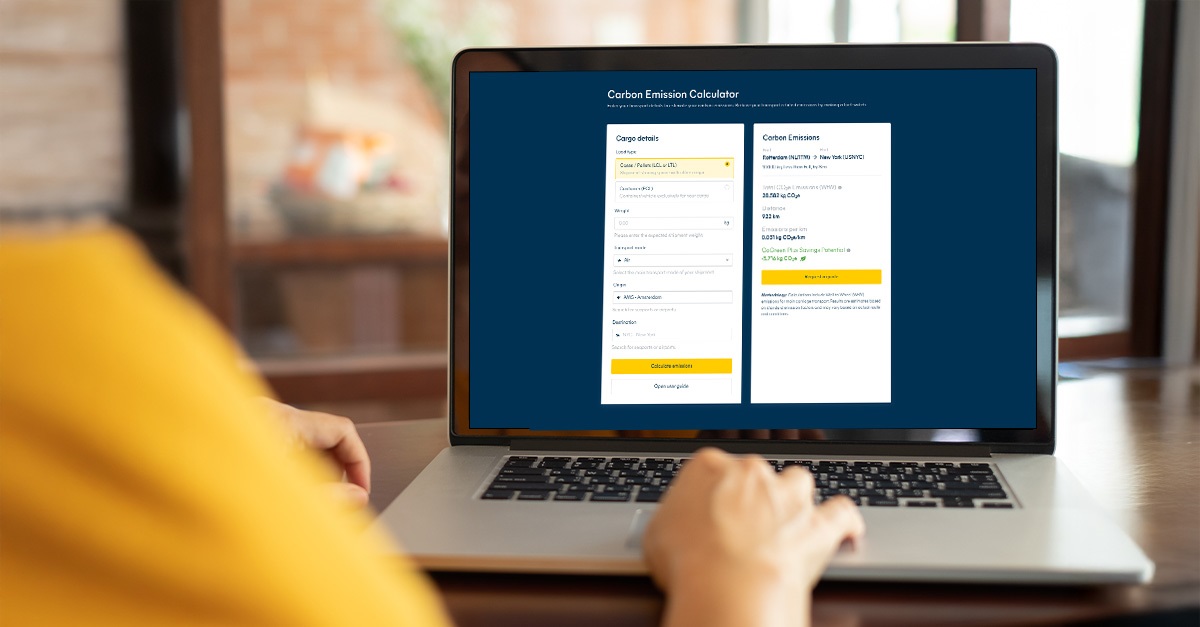
Want to calculate your shipment’s emissions? Try our carbon calculator tool here.
What is book and claim?
One of the most important concepts behind sustainable fuel adoption is the book and claim approach.
Sustainable fuel is currently only available at selected ports and airports around the world. Physically transporting sustainable fuel to every location would add cost, complexity and additional emissions.
To overcome this challenge, the logistics industry uses a book and claim model.
Under this approach, the physical movement of fuel is separated from the environmental attributes associated with that fuel. Sustainable fuel is used within the transport network, while the resulting emissions reduction is allocated through a verified accounting process aligned with recognised industry standards.
The process follows a “one atmosphere” principle, where reductions are accounted for within the same transport mode and network, even if the specific shipment is not physically transported using the vessel or aircraft consuming that fuel.
This allows businesses to support the adoption of sustainable fuels across the industry while receiving verified emissions reductions associated with their transport activity.
How does GoGreen Plus* work?
GoGreen Plus* is Hillebrand Gori and DHL’s service contributing to lower lifecycle emissions compared to conventional fuel use.
GoGreen Plus* is a value-added service contributing to decarbonization measures within our logistics network. By using alternative fuels and/or technologies, the service reduces the use of fossil fuels within the transport network. This does not necessarily mean that the specific shipment is physically transported using the assets consuming these fuels or technologies.
For ocean freight shipments, GoGreen Plus* leverages Sustainable Marine Fuel.
For air freight shipments, GoGreen Plus* leverages Sustainable Aviation Fuel.
The environmental attributes are verified through a chain-of-custody process and are independently audited to support avoidance of double counting. Hillebrand Gori works with approved carrier partners and follows recognised industry frameworks and standards for emissions accounting and reporting.
Customers receive documentation supporting the allocation of emissions reductions to their shipments through the book and claim methodology.

Why are sustainable fuels becoming more important?
Sustainability reporting requirements continue to evolve and many businesses have established emissions reduction targets across their supply chains. Regulatory initiatives such as FuelEU Maritime are also encouraging greater adoption of lower-emission fuels across ocean freight networks.
At the same time, regulators, investors and customers increasingly expect transparency around transport emissions and decarbonization activities.
Sustainable fuels are becoming one of the most scalable tools available to lower emissions in hard-to-abate sectors such as ocean freight and aviation. As availability expands and adoption grows, sustainable fuels are expected to play a larger role in reducing transport emissions across global supply chains.
For wine, beer and spirits businesses operating internationally, understanding how sustainable fuels work can help support more informed transport decisions and sustainability planning.
How Hillebrand Gori can help with understanding sustainable fuel use in transportation
As a logistics partner specialised in wine, beer and spirits, Hillebrand Gori supports importers, producers and distributors with transport solutions designed for reliability, visibility and emissions transparency. Through GoGreen Plus*, businesses can access solutions using Sustainable Marine Fuel and Sustainable Aviation Fuel that contribute to decarbonization measures within global transport networks.
Combined with emissions reporting tools such as the Carbon Calculator and myHillebrandGori, these solutions can help businesses better understand and manage transport-related emissions.
Read more about our transport-related sustainability efforts here.
* GoGreen Plus is a value-added service to a DHL shipment contributing to decarbonization measures within DHL’s logistics network. By using alternative fuels and/or technologies DHL reduces the usage of fossil fuels in the mode of transport used for the GoGreen Plus shipment. This does not necessarily mean that the specific shipment is physically transported with the assets using these fuels or technologies. Further information, e.g. on concrete decarbonization measures is available here.
Sustainable Marine Fuel is a lower-emission alternative to conventional marine fuel. It can reduce lifecycle greenhouse gas emissions compared to conventional marine fuel, depending on the feedstock and production method used.
Emissions reductions are calculated against a conventional fossil fuel baseline using recognised logistics emissions methodologies and audited verification processes.
How can we help your business grow?