Freight consolidation: smarter imports for beverages
Table of contents
- What is freight consolidation?
- Why freight consolidation matters in beverage logistics
- Freight consolidation vs. co-loading: what's the difference?
- Why choose specialised freight consolidation for alcoholic beverages?
- When should an importer consider freight consolidation?
- Ready to start using our LCL services?
Freight consolidation is a logistics strategy that is popular among large and small wine, beer and spirits importers. By combining smaller shipments into a shared container, it offers an easy and cost-effective solution to manage inventory and transport needs, without requiring a full container load.
But what makes this method so useful for alcoholic beverage logistics? And when does it make the most sense to consider it?
Here’s a closer look at how freight consolidation works and why it could be the right move for your business.
What is freight consolidation?
Freight consolidation involves combining multiple smaller shipments into one full container. Whether that's multiple wineries to one importer or multiple wineries to various importers. These consolidated loads are moved together, typically under one bill of lading, to reduce costs and improve efficiency.
For wine, beer and spirits, this method allows importers to move smaller quantities while still benefiting from space and cost optimisation. Instead of waiting until there’s enough volume to fill a container, importers can share container space with others. This helps to reduce costs and keep a leaner inventory closer to the point of sale.
Want to know how sea LCL works for beverage transport? Read: The secrets of sea LCL every beverage buyer needs to know
Why freight consolidation matters in beverage logistics
Freight consolidation enables importers to:
- Save on costs by only paying for the space they use in the container
- Reduce inventory pressure by ordering smaller volumes more frequently
- Optimise transport planning across multiple suppliers and origins
- Free up cash by not holding large stocks
This approach is particularly useful for beverage importers who manage seasonal stock flows, trial new product lines, or operate across several regions. It’s a way to stay flexible and responsive in a fast-changing market.
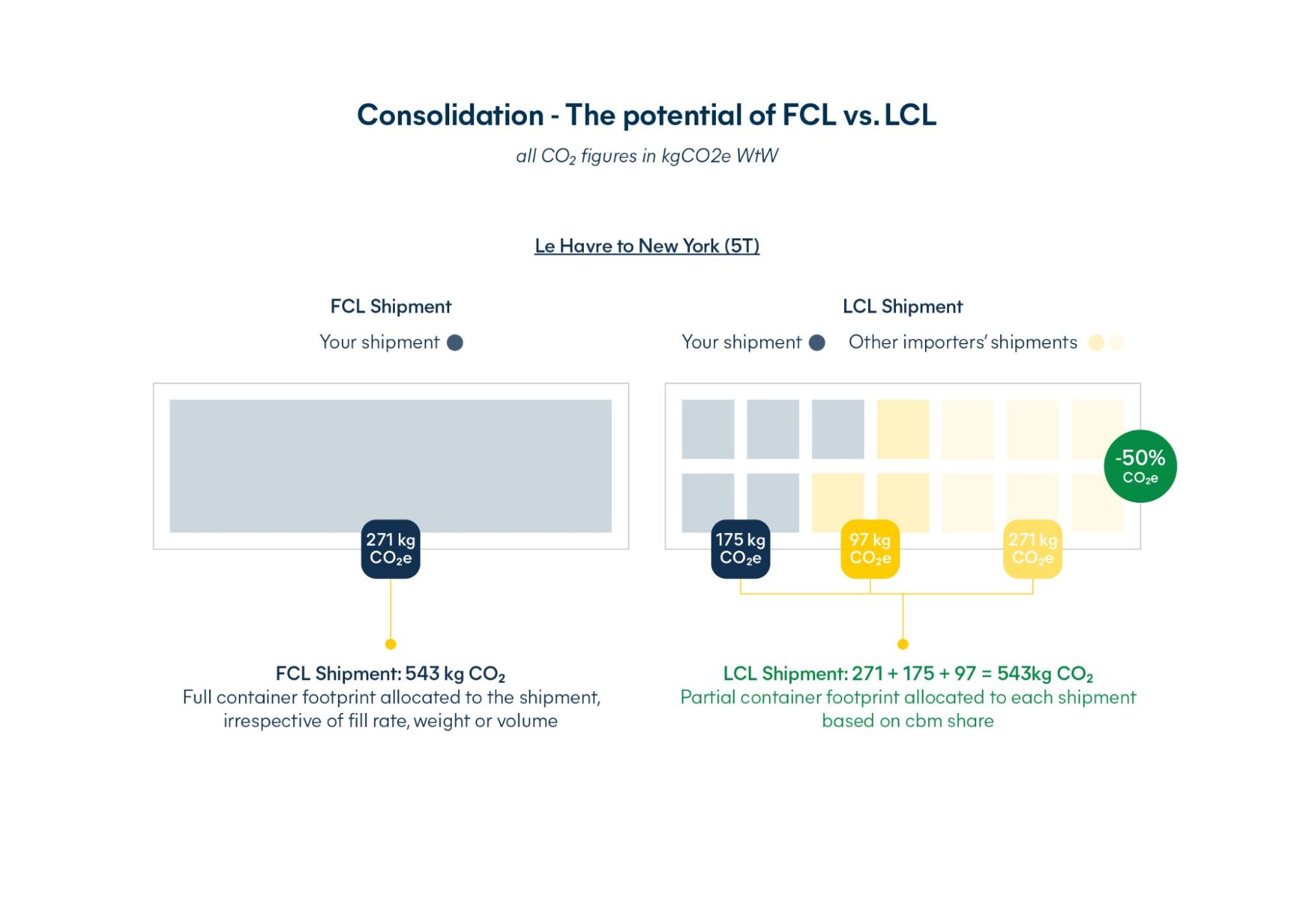
Sharing container space with others reduces the overall carbon footprint compared to shipping multiple small loads in containers not filled to capacity. Think of LCL shipping like car sharing. You’re going on a trip with friends; instead of each person driving their own car, together, you take one car to your destination. Each person then contributes to the travel costs associated with the journey – and by sharing one car, you’ll be generating less emissions.
Freight consolidation vs. co-loading: what's the difference?
It’s easy to confuse freight consolidation with co-loading. But for wine, beer and spirits importers, the differences matter.
Freight consolidation (LCL for wine, beer and spirits)
- The container is loaded exclusively with alcoholic beverages
- Managed by a logistics provider that specialises in alcohol-only transport
- Optimal transport conditions such as temperature control and secure handling
- Service complies with regulations and customs requirements
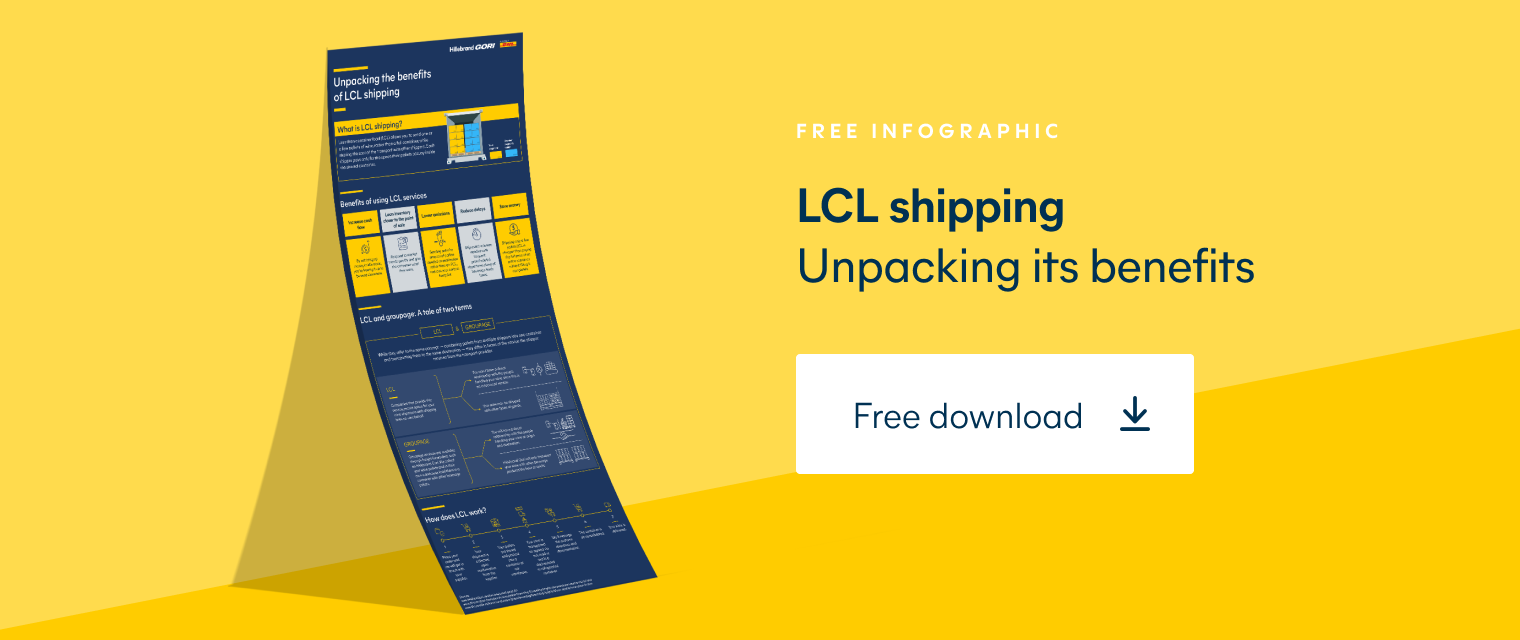
Interested in exploring more benefits of LCL transport for your beverages? Here’s a handy infographic: Unpacking the benefits of LCL shipping
Co-Loading (general LCL cargo services)
- Combines goods from various industries in a shared container
- Can expose beverages to odours, contamination or improper handling
- Less control over temperature stability or specialist care
- Typically managed by general freight forwarders
Choosing a specialist in beverage logistics means that your beverages are protected from common risks that come with general co-loading.
Still deciding between full container loads and LCL? Explore: LCL vs. FCL – Which is better for me?
Why choose specialised freight consolidation for alcoholic beverages?
Importers who choose specialised freight consolidation benefit from:
- Transport conditions suited for wine, beer and spirits
- Better protection against cross-contamination coming from non-beverage goods
- Faster, more reliable delivery times on established trade lanes
- Regulatory support, thanks to expert compliance management
- A team at origin and destination who understands the nuances of beverage transport
This approach gives importers more flexibility while helping reduce overstock and unnecessary storage costs.
When should an importer consider freight consolidation?
Freight consolidation can be an ideal solution when:
- Importing smaller, frequent volumes
- Managing seasonal or promotional stock flows
- Scaling operations without committing to full containers
- Working with multiple suppliers across different regions
- Launching new products or testing markets
It helps businesses stay agile and efficient while keeping supply chains aligned with actual demand.
Ready to start using our LCL services?
As the global leader in beverage logistics, Hillebrand Gori offers freight consolidation services tailored for wine, beer and spirits. From temperature control to compliance support, every step is designed to protect the integrity of your beverages.
Explore our LCL services here
Check our sailing schedules here
Importers can benefit from:
- Shared containers dedicated exclusively to alcoholic beverages
- Established trade routes with frequent sailings
- In-house customs expertise and documentation handling
- Global pickup network with seamless coordination
- Transparent tracking and digital tools to manage transport
Whether you're shipping small volumes or scaling up, freight consolidation with Hillebrand Gori offers the flexibility, control and care your beverages deserve.
Reviewed by Hillebrand Gori
Yes. With a logistics partner specialising in alcoholic beverages, freight consolidation means careful handling and temperature-controlled transport options to help preserve product quality.
Not necessarily. Consolidated shipments often follow set trade lanes with regular sailings, offering predictable timelines and frequent departures.
Yes. Freight consolidation allows for multiple pickups and combines orders into a single container, making it ideal for importers working with a network of suppliers.
How can we help your business grow?
-ebook-1---global-freight-forwarding/hil---cta-text-1---ebook-global-freight-forwarding-(1).png?sfvrsn=a2292c3e_3)
-ebook-1---global-freight-forwarding/hil---cta-post---yellow.jpg?sfvrsn=5e55bfc5_2)