How much stock is enough?
- Enough to cover the demand between two orders/deliveries. Let’s call this the cycle stock. For example, if replenishment takes place every month, the average cycle stock holding needs to cover the demand in this month. If replenishment takes place every week, the average cycle stock holding only needs to cover the demand in this week.
- Enough to deal with the fluctuation in demand and supply during the replenishment lead time (time between purchase order placement and delivery). This is called safety stock.
Imagine safety stock as your safety net. It’s the buffer needed to tackle uncertainties like fluctuation in demand or in lead times. In order to minimise the amount of safety stock, we should minimise uncertainties.

Five stock management tips to reduce stock while maintaining availability
1. Order more often, smaller quantities
By far the most effective way to reduce your stock holding is to order more often, in smaller quantities. The traditional approach of focusing solely on minimising transport costs often leads to rounding up orders to fill containers, inadvertently driving up stock levels.
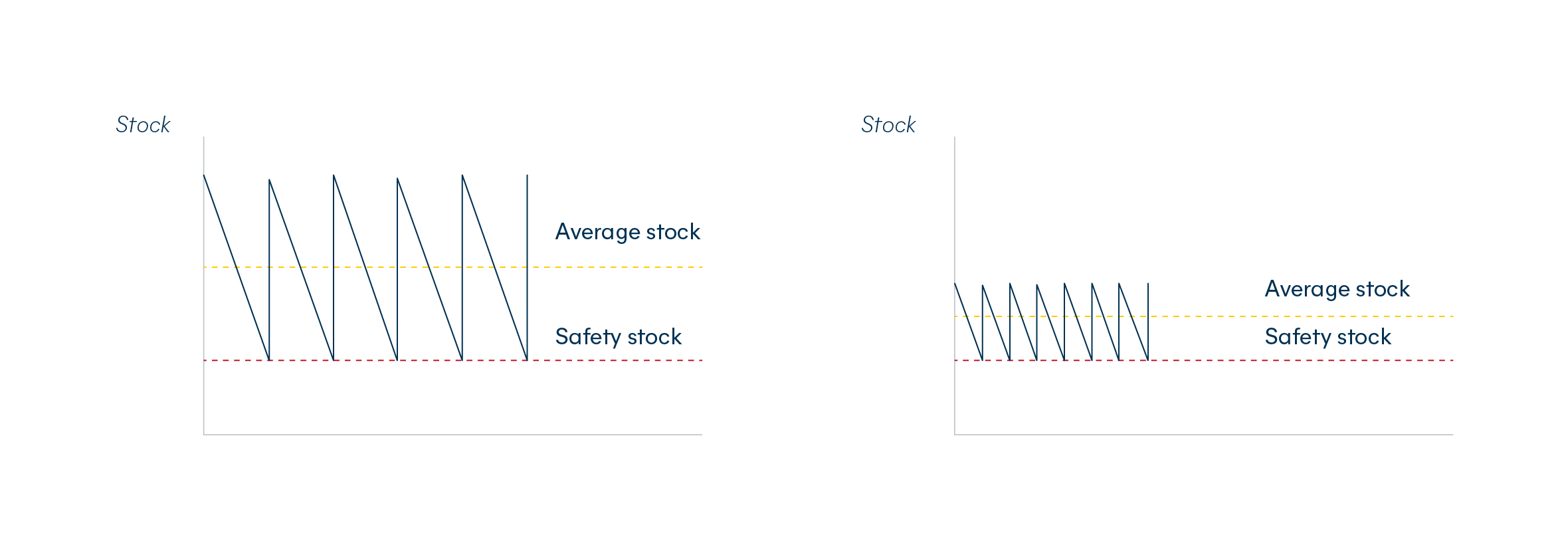
With Hillebrand Gori’s LCL service, you can say goodbye to unnecessary stockpiling. LCL (less-than-container-load), also called groupage, allows multiple shippers to share a single container. That way, you can order the exact quantity you need - no more, and no less.
On all the major wine, beer and spirits trade lanes, Hillebrand Gori offers a beverage-only LCL service with fixed departures, enabling you to book smaller volumes and enjoy door-to-door delivery. Say hello to a steady flow of goods, reduced inventory, and enhanced product availability.
2. A robust and reliable shipment process
Uncertainties in replenishment lead time have a greater impact on required buffer stock than demand uncertainties. That’s why a reliable inbound process is paramount for effective stock management. And that’s where Hillebrand Gori steps in, ensuring smooth sailing for your imports.
3. Collaboration with your suppliers
If a specific bottle of wine is not available on the retail shelf, this is a problem for all parties in the supply chain. You could even argue that the problem is even bigger for the supplier than for the retailers, as it is likely that the retailer will sell a substitute bottle, but there is a small chance it will be a bottle of the same supplier. Therefore, the supplier will miss the sale. This is why stock management must be addressed across the integrated supply chain as there is a common objective to keep the products available on the shelf. At Hillebrand Gori we understand this very well and we have the tools and organization to facilitate this collaboration.
4. Reduce lead times by introducing export stock buffers
In order to reduce the lead time it would be a good consideration to make sure the stock is available and ready for shipment in the export country. Hillebrand Gori offers a warehouse network in the export countries to keep stock ready for shipment.
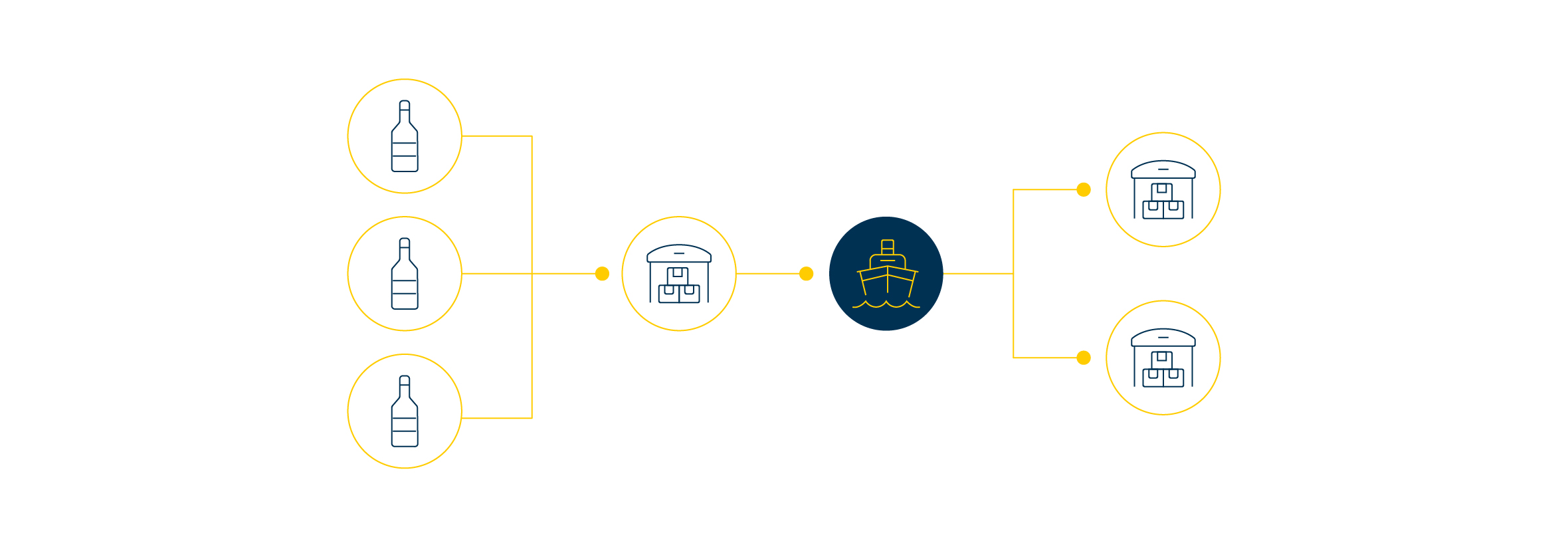
This stock management solution allows suppliers to optimise production quantities, maintaining correct stock levels, minimise uncertainties, and respond to orders faster.
Having all export stock in one warehouse location allows consolidation of multiple export orders in one container to be shipped to one or more destination warehouses.
5. Share information
Stock management is about managing the uncertainties in the supply chain. However uncertainties for one party, may not be uncertainties for another party. For example a retailer will have a clearer idea how much they think they will sell in a promotion than the supplier. Or a supplier will have a better understanding about the supply of e.g. dry materials
To manage the stock in the supply chain it is valuable to share information like forecast, stock levels, production schedules between parties in the supply chain.