Ocean freight market April 2025
Table of contents
- Steady demand, but a slowdown may be on the horizon
- New capacity continues to enter the market
- Red Sea disruptions continue to absorb capacity
- Congestion and delays persist
- Is overcapacity a real concern? It depends.
- US Tariff and Chinese vessels policy adds uncertainty to trade flows
- Freight rates outlook: short-term softness, long-term uncertainty
- We can navigate this together
As the year progresses, global freight continues to navigate a mix of growing demand, shifting policy landscapes and persistent operational disruptions. Here's a closer look at the key developments shaping the market currently.
Steady demand, but a slowdown may be on the horizon
Container volumes remained on a strong trajectory into early 2025. Following a record 7.5% growth in 2024, the highest since 2019, demand has continued rising:
- January saw a 5.8% increase year-on-year.
- February followed with a 3% rise, led by strong imports to North America.
- Buoyant trade flows between Asia–Europe and the Middle East have also contributed to sustained volumes.
This growth is largely driven by advance importing, particularly in the US, ahead of potential tariff changes. However, economists now project global GDP to grow by 2.5% in 2025, down from previous forecasts. The moderation in economic outlook could impact future demand levels.
New capacity continues to enter the market
While demand has grown the supply side is evolving rapidly, with new vessel deliveries on the rise:
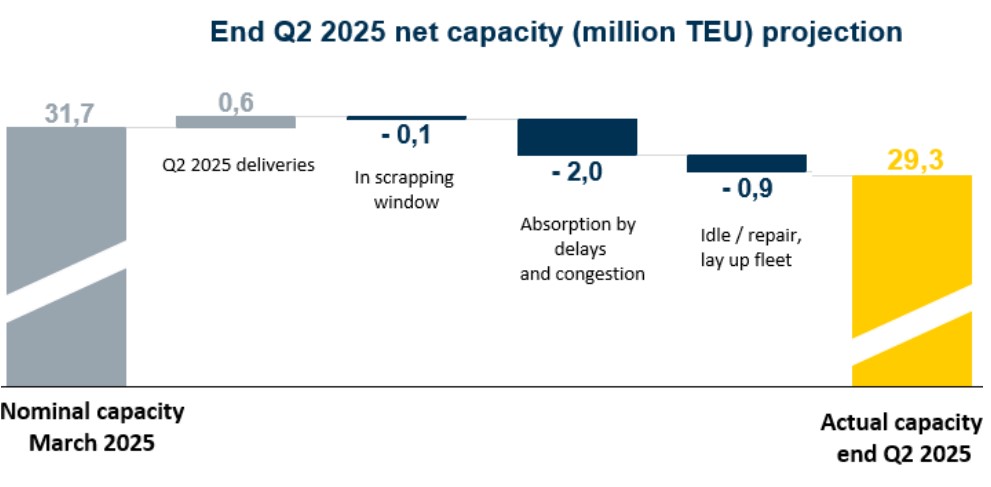
- The global container fleet grew by 10% in 2024, reaching 31 million TEUs.
- An additional 6% increase is expected in 2025, with 1.8 million TEUs set to join the fleet.
- The total vessel order book now stands at a record 9 million TEUs.
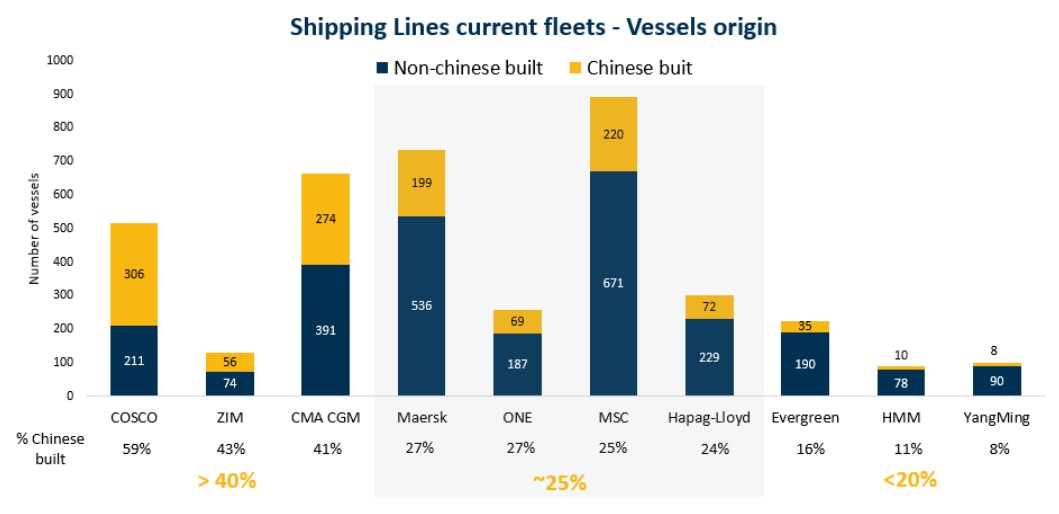
- Over 70% of new vessel orders are held by five key carriers: MSC, CMA CGM, COSCO, Maersk and ONE.
This influx of capacity has not been evenly distributed across all trade lanes. While routes like Transpacific and Asia-Europe have seen increases in vessel deployment, supply to markets such as Latin America, Oceania and the Transatlantic remains comparatively flat, despite ongoing demand.
Red Sea disruptions continue to absorb capacity
The security situation in the Red Sea remains unresolved, with no container traffic expected to resume through the Suez Canal in the short term. As a result:
- Carriers continue routing vessels via the Cape of Good Hope.
- These deviations absorb 8-10% of global effective capacity.
- Schedule reliability remains below 55%.
Any future shift back to the Suez Canal, if and when it happens, could overwhelm key ports with congestion and cause widespread schedule changes across global trade routes.
Congestion and delays persist
Port congestion continues to challenge supply chain stability. Key terminals are reporting bottlenecks as demand remains high and reliability remains low:
- Ports in Asia, Rotterdam, Le Havre and hubs like Cartagena and Manzanillo are all operating near or at capacity.
- Labor unrest, climate events and ongoing delays are collectively absorbing more than 6% of global capacity.
- The industry is also managing aging fleets and scheduled vessel upgrades to meet IMO and FuelEU compliance.
Is overcapacity a real concern? It depends.
Despite record levels of new capacity entering service, the amount of space effectively available to shippers remains limited:
- Maintenance, retrofitting and environmental regulations continue to reduce active fleet availability.
- Blank sailings and fleet idling have increased, especially as new alliance structures roll out.
- Overall, actual available capacity remains tighter than the headline numbers may suggest.
US Tariff and Chinese vessels policy adds uncertainty to trade flows
Recent analyses highlight the broader implications of tariff uncertainties on transportation sectors. For instance, a MarketWatch article discusses how such uncertainties, coupled with adverse weather conditions, are affecting railroad operations, underscoring the widespread impact on various modes of freight transport.
A temporary 90-day suspension of these reciprocal tariffs, announced on April 9, may prompt a short-term spike in demand, particularly into the US and from Europe. Wine and spirits shipments could see increased movement as importers look to get ahead of any potential changes.
In addition, the USTR position on fees towards Chinese owned and built vessels could bring further disruption.
- A decision expected on April 17 though latest intel suggests this implementation may be postponed altogether
- Proposed tariffs include fees of up to $1.5 million per port call, depending on a carrier’s reliance on Chinese shipbuilding.
- This policy could impact a wide range of carriers and lead to fewer US port calls, potentially increasing ocean freight rates.

Freight rates outlook: short-term softness, long-term uncertainty
In the near term, rates across many East–West routes are expected to soften, largely due to tariff-related demand shifts. However, several factors could create upward pressure in the months ahead, including early peak season activity, persistent Red Sea disruptions and shifting demand from European markets. Industry benchmarks like the World Container Index by Drewry reflect these rate fluctuations, offering a snapshot of how global trade dynamics continue to influence pricing. These factors could create upward pressure in the months ahead:
- Sustained demand from Europe, partly linked to rearmament spending.
- Early onset of Peak Season activity, driven by Red Sea disruptions.
- Potential adjustments in carrier deployment strategies as alliances settle into new schedules. Carrier behavior around capacity management will remain a key influence on rate developments going forward.
We can navigate this together
The freight landscape in April 2025 continues to be shaped by both growth and uncertainty. While container volumes have started strong, tariff policies and ongoing disruptions may alter the balance between supply and demand in the coming months. For importers of wine, beer and spirits, maintaining visibility on market developments will be essential to staying agile and cost-efficient.
Navigating these changing market conditions calls for a logistics partner with expertise and focus. That’s us! With solutions tailored to the specific needs of beverage logistics and a deep understanding of global transport dynamics, We’re here to help make logistics easy. Get in touch today to see how we can support your business.
Reviewed by Hillebrand Gori
Ongoing security concerns in the Red Sea continue to divert vessels via the Cape of Good Hope, absorbing up to 10% of capacity and reducing schedule reliability. This remains a major challenge for global shipping networks.
Freight rates are softening short term due to tariff uncertainty and market shifts. However, rising European demand, early peak season activity and capacity management may drive rates up later in the year.
Pending US tariffs on Chinese-built vessels could lead to fewer port calls and higher freight costs. For wine and spirits importers, this could mean increased demand from Europe and tighter space availability on key trade.
How can we help your business grow?
-ebook-1---global-freight-forwarding/hil---cta-text-1---ebook-global-freight-forwarding-(1).png?sfvrsn=a2292c3e_3)
-ebook-1---global-freight-forwarding/hil---cta-post---yellow.jpg?sfvrsn=5e55bfc5_2)