Busiest ports in the US: key hubs for alcoholic beverages
The busiest ports in the U.S. are essential gateways in global trade, supporting the import and export of a wide range of goods, including alcoholic beverages like wine, beer and spirits. Ports such as New York / New Jersey (NJ/NY) , Los Angeles (LA), Long Beach (LB) and Oakland are not only critical for domestic distribution, but also play vital roles in facilitating transatlantic and transpacific trade. These ports have maintained a strong container throughput, as evidenced by NY/NJ’s top position in port calls and total TEU capacity, emphasizing its importance in U.S. logistics.
In 2022, North American ports handled 8.1% of global container [shipping] throughput, according to data provided by Alphaliner. This reflects the steady role of major U.S. ports in sustaining international supply chains, despite fluctuating growth rates. With U.S. ports like NY/NJ and LA/LB ranking among the busiest, they are pivotal for importers and exporters navigating global commerce, particularly for wine, beer and spirits.
The top 20 busiest ports in the US
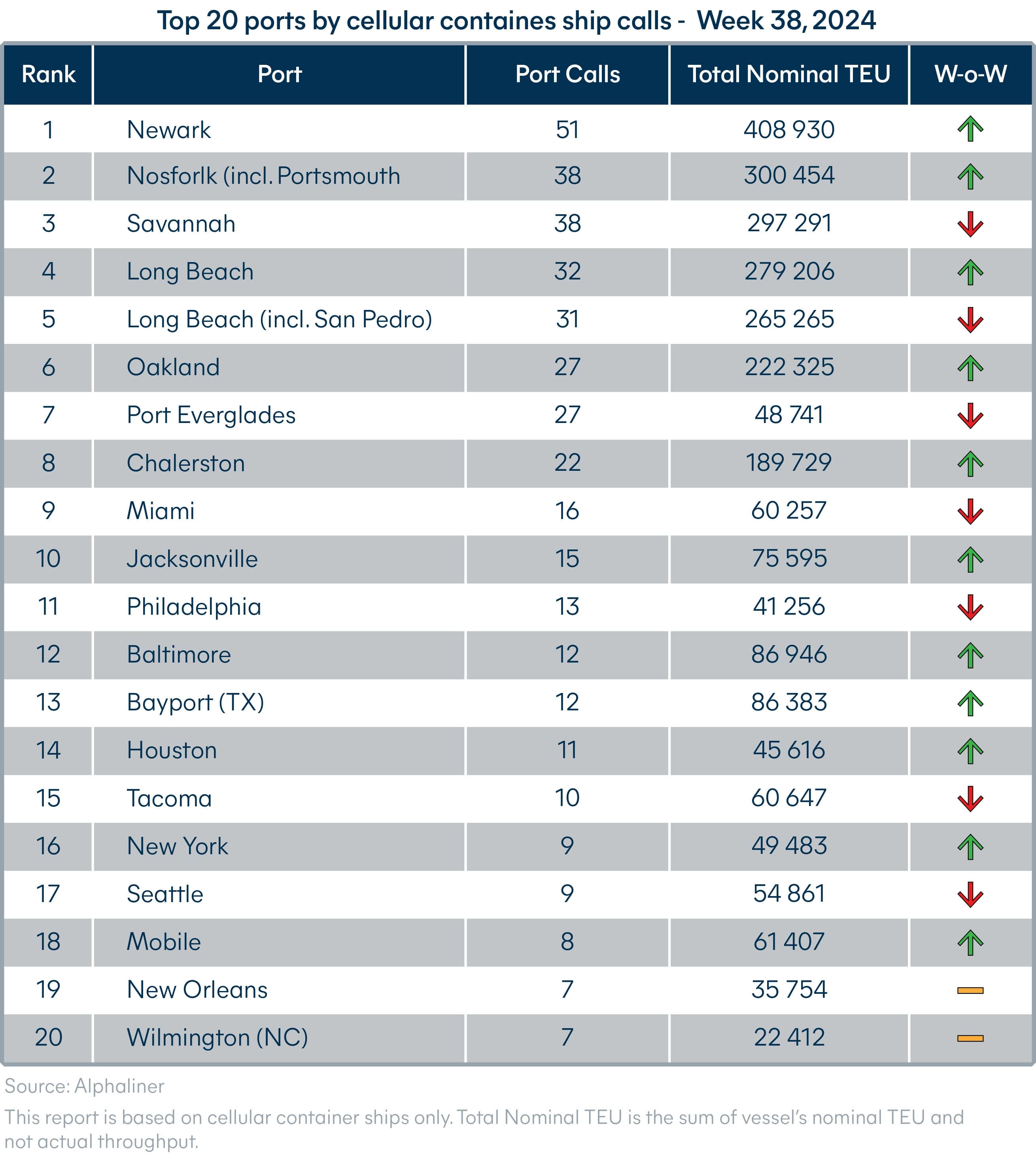
According to data produced by Alphaliner, the top 20 busiest ports in the US by the number of cellular container ship calls for Week 38 of 2024, are as follows:
Top 20 busiest ports in the US overview
- Newark is the leader in the New York / New Jersey port terminal complex with 51 ship calls and 408,930 TEU (Twenty-foot Equivalent Units), indicating its strong capacity to handle high container volumes efficiently. Its positive week-on-week growth suggests a rising trend in activity.
- Norfolk (including Portsmouth) comes in second with 38 ship calls and 300,454 TEU. The port has also experienced a week-on-week increase, demonstrating its consistent role in handling substantial volumes.
- Savannah is ranked third with 38 ship calls and 297,291 TEU. Despite its high activity, it shows a week-on-week decline, possibly reflecting temporary operational adjustments or decreased demand.
- Long Beach ranks fourth with 32 ship calls and 279,206 TEU, showing an increase from the previous week, emphasizing its role as a major gateway for international shipping.
- Los Angeles (including San Pedro) has 31 ship calls and 265,265 TEU, experiencing a slight decrease in activity. Nevertheless, it remains a critical hub for transpacific trade.
- Oakland is positioned sixth with 27 ship calls and 222,325 TEU. The week-on-week improvement highlights its increasing relevance in the West Coast container traffic network.
Key Factors for Ranking
The busiest ports in the US are ranked primarily based on port calls and total nominal TEU, which reflect the container handling capacity of each port. Port calls represent the number of times container vessels arrive at each port, while Total Nominal TEU gives an estimate of the overall volume these vessels can carry. Additionally, the week-on-week (W-o-W) trend indicates whether the activity at each port has increased, decreased, or remained stable, offering insights into market fluctuations or port-specific developments.
But how does this relate to the world of wine, beer a spirits?
Key US ports for wine, beer and spirits transport
The busiest ports in the US highlighted in the ranking each play a specific role in the transport of wine, beer and spirits. Here’s how some of these ports contribute to the movement of these alcoholic beverages:
- Los Angeles and Long Beach (LA/LB) are crucial for high-volume imports and exports of alcoholic beverages. Given their proximity to transpacific trade routes, these ports handle significant volumes of cased beverages as well as being major entry points for the retail market in the greater Los Angeles region. Many imported wines, beers and spirits from Asia and Oceania enter through these ports, ensuring a steady supply to the West Coast’s vibrant consumer market.
- New York and New Jersey (NY/NJ) serves as the powerhouse on the East Coast, catering to imports of wines and spirits from Europe and the Mediterranean. These ports also play a key role in distributing products throughout the northeastern U.S., which is one of the largest markets for premium wines and craft spirits in the country.
- Oakland is particularly notable for handling a significant share of California wine exports. California wines are globally recognized for their quality and Oakland, due to its location, handles most of these shipments. However, given the increasing cost of California wines, export volumes have seen some decline. Still, Oakland remains the preferred gateway for these exports.
- Norfolk, Charleston, and Savannah serve as primary ports for spirits exports, especially those originating from Kentucky, Tennessee and other parts of the U.S. interior. These southern Atlantic ports are favored for their logistical efficiency when connecting spirits to international markets in Europe and other regions. Bourbon is a major export moving through these ports, reflecting the unique demands of global customers who value American whiskeys.
- Houston and New Orleans also play a notable role in shipping spirits and beer. The Gulf Coast ports are advantageous for exports to Central and South America, offering a more direct route to these markets, which continue to grow in demand for U.S.-made beverages.
According to the information on OEC, in 2022, the United States exported beer primarily to countries like Chile, Panama, Honduras, Canada, and the Bahamas. The Port of Houston and Port of New Orleans play critical roles in facilitating these exports due to their efficient access to Central and South American markets. The growing demand from countries like Honduras and Panama reflects the importance of these southern ports for distributing U.S.-made beers internationally.
In 2023, U.S. spirits exports reached a record $2.2 billion, largely driven by American Whiskeys, which made up 63% of the total. The European Union was the top export market, followed by Canada, Mexico, Australia, and the UK. Ports like Norfolk, Savannah, and Charleston play a crucial role in moving these spirits, particularly for exports originating from Tennessee and Kentucky.
In 2021, New York/New Jersey was one of the busiest ports in the US for wine imports, handling more than 42% of wine imports by value. This highlights its significance as a major entry point for European and South American wines. Oakland also played an important role, managing around 15% of wine imports, which reflects its proximity to California's wine-producing regions and logistical advantages for distribution. These ports are vital hubs for the movement of imported wines across the United States.
Looking to transport wine, beer or spirits using the busiest ports in the US?
Hillebrand Gori’s expertise lies in optimizing the transportation of wine, beer and spirits to and from key ports, like those mentioned above. Our understanding of each port’s unique capabilities allows us to offer tailored logistics solutions that align with the specific needs of alcoholic beverage shipments. From managing California wine exports through Oakland to facilitating the efficient export of Kentucky bourbon through Norfolk, Hillebrand Gori provides a seamless approach to global supply chain management for these products. Our services are reliable, and we offer temperature-controlled transport, expert handling and a focus on minimizing transit times—critical aspects to help preserve the quality of wine and beer.
Reviewed by Hillebrand Gori
New York/New Jersey is the busiest U.S. port complex for wine imports on the East Coast. It handles around 42% of wine imports by value, mainly from Europe.
Ports like Norfolk, Charleston, and Savannah are key for exporting spirits, especially American whiskeys from Kentucky and Tennessee. These ports offer efficient access to international markets such as the EU and UK.
The ports of Los Angeles and Long Beach handle a significant volume of beer imports due to their proximity to transpacific trade routes, making them critical entry points for beer from regions like Oceania and Asia.
In 2022, U.S. ports handled 8.1% of the global container throughput, emphasizing their importance in global trade. Major ports like New York/New Jersey and LA/Long Beach consistently rank among the busiest, supporting international supply chains.
How can we help your business grow?