Incoterms® summarized, a quick reference for wine, beer and spirits importers
Incoterms® are used every day in international trade. For importers of wine, beer and spirits, they provide a shared language for defining responsibility, cost and risk across transport stages.
This article is designed as a quick reference guide. It summarises each Incoterm® in simple terms, without going into detailed interpretation. It can support fast checks when reviewing contracts, purchase orders or shipment instructions.
For a deeper explanation of how Incoterms® 2020 apply in practice, including what changed and how to choose the right rule, readers can refer to the full guide linked below.
What are Incoterms®?
Incoterms® are international commercial terms issued by the International Chamber of Commerce. They define how buyers and sellers divide responsibilities during domestic and international transport.
Each Incoterm® focuses on:
- Where risk transfers from seller to buyer
- Who pays which transport-related costs
- What each party is obliged to arrange, such as carriage or insurance
Incoterms® do not cover ownership, payment terms or contractual penalties.
Are Incoterms® still relevant today?
Yes. Incoterms® 2020 remain the active framework until a new edition is released. Contracts continue to rely on them to avoid misunderstandings, especially where sea shipping and inland transport are combined.
It is always good practice to specify the Incoterm®, the named place and the year, for example, “CIF Antwerp, Incoterms® 2020”.
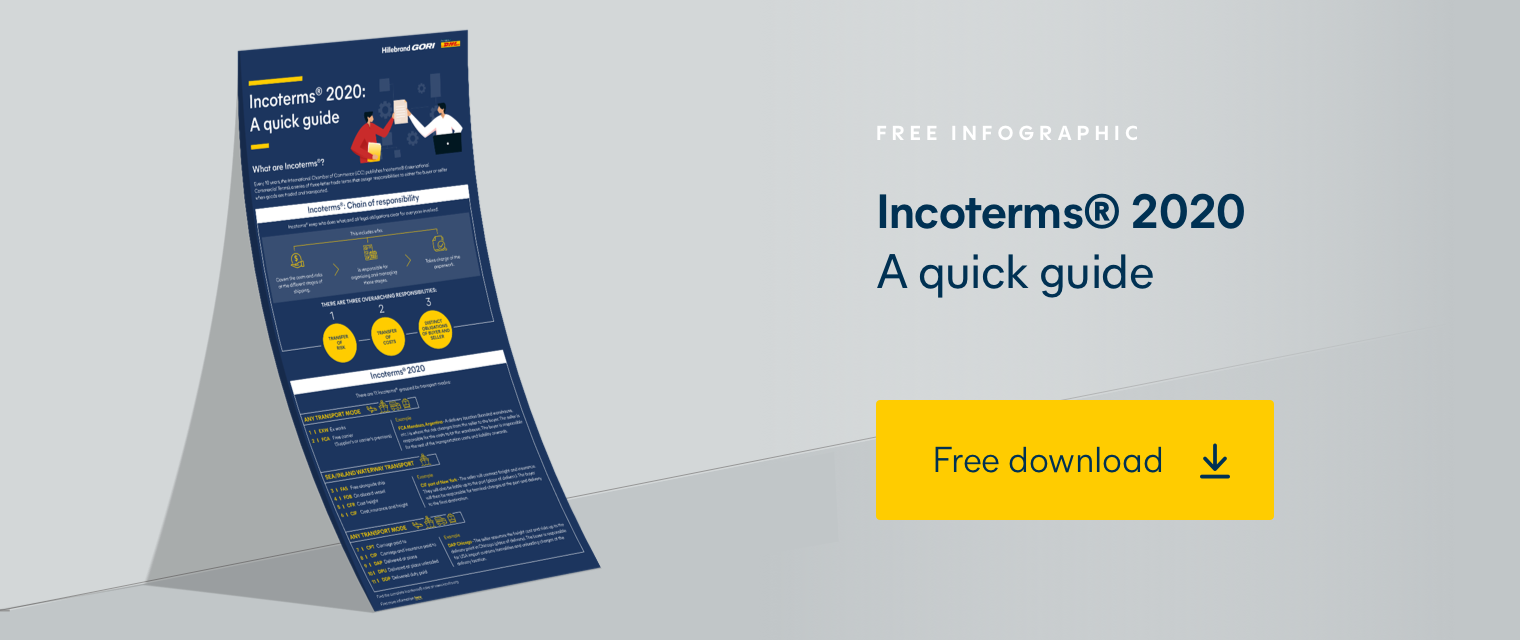
Incoterms® 2020, quick overview
Below is a concise summary of each Incoterm® used in wine, beer and spirits trade.
EXW – Ex Works
The seller makes the alcoholic beverages available at their premises. The buyer handles all transport, costs and risk from that point.
FCA – Free Carrier
The seller delivers the beverages to a carrier or named place. Risk transfers once delivery to the carrier is completed.
FAS – Free Alongside Ship
The seller places the beverages alongside the vessel at the port of shipment. Risk transfers at the quay.
FOB – Free On Board
The seller loads the beverages on board the vessel. Risk transfers once the goods are on the ship.
CFR – Cost and Freight
The seller pays for sea shipping to the destination port. Risk transfers at loading, not at arrival.
CIF – Cost, Insurance and Freight
Similar to CFR, but the seller also provides insurance for the buyer during sea shipping.
CPT – Carriage Paid To
The seller arranges and pays transport to the named destination. Risk transfers when the goods are handed to the carrier.
CIP – Carriage and Insurance Paid To
Like CPT, with the addition of higher insurance coverage arranged by the seller.
DAP – Delivered At Place
The seller delivers the beverages to the named destination. Risk transfers on arrival, before unloading.
DPU – Delivered at Place Unloaded
The seller delivers and unloads the beverages at the named destination. Risk transfers after unloading.
DDP – Delivered Duty Paid
The seller manages transport, duties and taxes to the final destination. Risk transfers on delivery.
How to use this summary
This page works best as a reference tool. It supports fast comparisons when reviewing Incoterms® in contracts or discussions with suppliers.
For importers planning routes, insurance levels or visibility strategies, more context is often required.
Want the full explanation?
This summary is designed for speed. For a more detailed, importer-focused explanation of Incoterms® 2020, including what changed from earlier versions and how they affect wine, beer and spirits transport today, see the full guide here:
How Hillebrand Gori can help with summarizing Incoterms®?
As a logistics partner specialised in wine, beer and spirits, Hillebrand Gori supports importers in applying Incoterms® clearly across contracts and transport flows. With experience across sea shipping, inland transport and customs coordination, teams can help align commercial terms with operational planning. Digital tools such as myHillebrandGori also support visibility and consistency throughout the journey.